Enchanting Alice in Wonderland Backgrounds for Your Projects
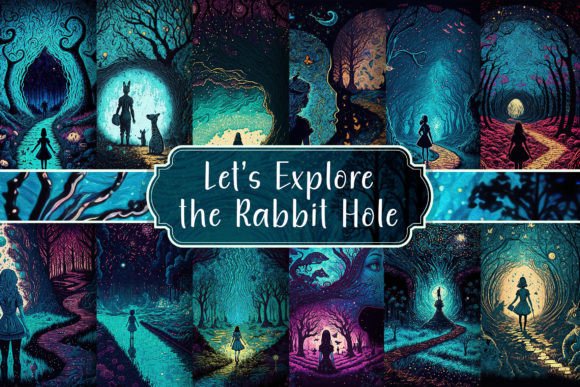
There's a particular kind of magic that comes with the story of Alice in Wonderland—a blend of whimsy, nostalgia, and surreal beauty that has captivated audiences for over a century. That same enchantment is now at your fingertips with a collection of high-resolution Alice in Wonderland backgrounds designed for creators who want to infuse their work with a sense of wonder. This isn't just another set of generic patterns; it's a carefully curated toolkit of 12 distinct visuals, each telling its own story from the rabbit hole.
Imagine the intricate details of a vintage teacup, the mysterious glow of a "Drink Me" bottle, or the playful geometry of a deck of cards scattered across a mossy forest floor. These backgrounds capture the essence of Wonderland with rich textures, balanced color palettes, and a timeless, illustrative quality. They feel both classic and fresh, avoiding the pitfalls of overly childish or dated interpretations. The personality here is sophisticated whimsy—perfect for the designer or entrepreneur who understands that charm and professionalism can, and should, coexist beautifully.
Where Wonderland Meets the Real World: Practical Applications
The true value of any design asset lies in its versatility. These Alice in Wonderland backgrounds are built at a substantial 3600×3600px (or 12×12 inches), making them a powerhouse for both print and digital media. Their high resolution ensures crisp, clear reproduction whether you're creating a large-format poster or a detailed social media graphic. As a premium font or visual element often does, these backgrounds provide an immediate professional polish to any project they touch.
For graphic designers and content creators, these images are a goldmine. Use them as a textured foundation for logo design, giving a brand an instant narrative depth. They are exceptional for packaging design, especially for artisanal products, book boxes, or specialty teas where a story-driven aesthetic is key. In editorial design, they can transform a magazine feature or a blog post header from flat to fascinating. For web design, consider using them as subtle website backgrounds or hero image textures to create an immersive user experience.
Beyond the commercial sphere, their appeal extends to personal projects and hobbyists. Scrapbooking enthusiasts will find these backgrounds perfect for preserving memories with a touch of fantasy. They are ideal for creating unique journals, notebooks, or planners that inspire creativity. Small business owners can leverage them for social media graphics that stand out in a crowded feed, for printable wall art, or as elegant backdrops for product photography. The applications are limited only by imagination.
Crafting Cohesion: How Visual Assets Shape Brand Perception
A consistent and thoughtful visual language is the bedrock of strong brand identity. When you use a thematic asset like these backgrounds across your touchpoints—from your website to your packaging to your Instagram stories—you're doing more than decorating; you're building a recognizable world for your audience. This consistency fosters trust and professionalism. It tells your customers that you care about details and that your brand has a distinct personality.
The whimsical yet refined nature of the Wonderland aesthetic can influence how your brand is perceived. It can position a business as creative, approachable, and full of imagination, without sacrificing credibility. For a publisher, it signals a commitment to beautiful, story-driven content. For a blogger, it creates a memorable visual signature. The key is to use these assets intentionally, ensuring they complement your core message rather than overshadow it.
Integrating Wonderland: A Practical Guide for Creators
Adopting a strong visual motif is an exercise in strategy. Here’s how to thoughtfully integrate these backgrounds into your workflow:
- Evaluate the Project Fit: Does the project's tone align with wonder, curiosity, or vintage charm? These backgrounds excel in contexts related to literature, education, children's products (aimed at adults who are kids at heart), artisanal goods, and creative services. They might be less suited for a corporate financial report, but could be perfect for a creative agency's portfolio.
- Master the Font Pairing: The background is your stage; your typography is the lead actor. Pair these detailed backgrounds with clean, legible typefaces. A classic serif font for body text conveys timelessness, while a simple sans serif font can provide modern contrast. For headlines, a delicate script font or a handwritten font can echo the story's personal, whimsical feel. Always prioritize readability—ensure sufficient contrast between your text and the background's busy areas.
- Explore the Included Styles: With 12 images, you have a range of scenes and moods. Some may feature iconic symbols like keys or pocket watches, while others offer more abstract, textured patterns. Review each one. A "tea party" pattern might work for social media posts, while a more subtle "forest" texture could be ideal for a website background. Variety allows for project-specific choices and prevents visual monotony.
- Consider Commercial Licensing: For marketers, entrepreneurs, and anyone using these for client work or business promotion, understanding the license is non-negotiable. A clear, permissive license that covers commercial use is essential. This allows you to confidently use the assets in logos, merchandise, digital products, and advertising without legal ambiguity, protecting your business and your clients.
The goal is to use these assets as a catalyst for creativity, not a crutch. They should enhance your unique vision. Start by downloading the collection, explore each background in your design software, and experiment. See how a creative font interacts with the textures. Test how a background looks when cropped, scaled, or overlaid with a semi-transparent color. This hands-on exploration is where the real magic happens, transforming beautiful images into integral parts of your modern typography