Poison Garden Junk Journal Backgrounds: Dark Botanical Art
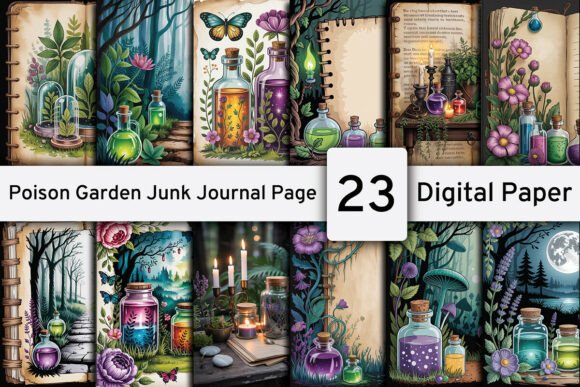
There’s a certain magic in the macabre, a beauty found in the shadows of a garden where the plants whisper cautionary tales. This is the world captured by the Poison Garden Junk Journal Backgrounds. It’s a collection that doesn’t just offer a backdrop; it provides a mood, a narrative, and a visual language steeped in dark botanical elegance. These aren’t your typical cheerful florals. They are intricate, moody, and textured designs featuring poisonous plants, apothecary motifs, and vintage anatomical sketches, all rendered in a rich, atmospheric style perfect for projects that demand depth and a touch of the mysterious.
The appeal of this collection lies in its unique personality. It blends the raw, tactile feel of a vintage junk journal with the precision of botanical illustration. You’ll find pages that look like aged parchment adorned with detailed drawings of belladonna, hemlock, and nightshade, interspersed with faded script, ledger lines, and distressed textures. The color palette leans into deep greens, burgundies, sepia tones, and charcoal blacks, creating a cohesive and immersive visual experience. For designers and creators, this isn’t just a set of images; it’s a curated aesthetic. It speaks to a specific audience drawn to the gothic, the historical, the literary, and the artfully eerie.
Where Dark Florals Shine: Applications for Creators
The versatility of the Poison Garden Junk Journal Backgrounds makes them a powerful tool across numerous creative fields. Their high resolution (3600x3600 pixels at 300 DPI) ensures they are crisp and detailed for large-scale print projects. Consider these practical applications:
- Publishing & Editorial Design: Use them as chapter openers, section dividers, or full-page backgrounds in gothic novels, poetry collections, or historical fiction. They add instant atmosphere and thematic depth to book layouts and magazine features.
- Branding & Packaging: They are ideal for brands with a dark, apothecary, or vintage persona. Think craft breweries, specialty tea companies, perfume makers, or boutique herbalists. The backgrounds can be used on labels, boxes, shopping bags, and website headers to build a cohesive, story-driven brand identity.
- Digital & Web Design: Create stunning, immersive website backgrounds, blog post headers, or social media graphics that stand out. They work exceptionally well for podcast covers, YouTube thumbnails, and Instagram stories for creators in the true crime, history, or fantasy niches.
- Print & Stationery: The possibilities are endless for physical products. Design unique invitations for a Halloween event or a gothic wedding, create journal covers, scrapbooking pages, art prints, posters, and greeting cards. The instant download format is perfect for small business owners looking to create their own product lines.
- Personal Projects: For hobbyists and crafters, these backgrounds transform ordinary junk journals, planners, and albums into personalized works of art. They provide a perfect canvas for collage, mixed media, and memory-keeping with a sophisticated, adult-oriented theme.
Working with a Strong Visual Voice: Practical Guidance
When you integrate a design asset as distinct as the Poison Garden Junk Journal Backgrounds, you’re not just adding color; you’re making a statement. Here’s how to use them effectively:
Evaluating Project Fit
First, ask yourself if the theme aligns with your project’s core message. This collection excels when the goal is to evoke mystery, history, nature’s darker side, or intellectual curiosity. It’s less about being scary and more about being intriguing and rich with narrative. It’s a perfect fit for projects that need a strong, authentic visual voice.
Typography and Readability
Pairing fonts with these detailed backgrounds requires thought. The backgrounds themselves are visually busy. Therefore, your primary text—whether for a headline on a poster or body copy on a website—needs to be highly legible. A clean, modern sans serif font often provides excellent contrast, allowing the text to pop without fighting the background. For accent text or logos, a classic serif font can complement the vintage feel, while a subtle script font might add a touch of elegance. Avoid overly ornate or handwritten fonts for large blocks of text, as they can become lost. The key is creating a clear visual hierarchy: the background sets the scene, and your typography guides the viewer’s eye.
Design Principles in Action
Treat these backgrounds as a foundational layer in your graphic design. Use them to establish mood and then build your composition with contrast. For example, place a crisp, white logo or a bold typographic element over a textured, dark botanical page. In editorial design, you might use a full-bleed background for a title page, then switch to a more subtle, patterned section of the same design for the text-heavy pages to maintain consistency without overwhelming the reader. This approach ensures professionalism and enhances audience engagement by creating a seamless, immersive experience.
Leveraging the Collection
The included 23 backgrounds offer variety within a cohesive theme. Don’t use them all at once. Instead, curate. Select the specific pages that best serve different sections of your project. One might be perfect for a main cover, another for an interior chapter page, and a more subdued pattern for a sidebar or footer. This intentional selection process elevates your work from simply using a background to thoughtfully designing a unified piece. Remember, these are premium design assets; their value is realized through skilled application.
In the end, the Poison Garden Junk Journal Backgrounds offer more than just pretty pictures. They provide a toolkit for storytelling, a way to inject authentic character and sophisticated mood into your work. Whether you’re a designer crafting a brand, a publisher setting a tone, or a hobbyist creating a personal treasure, these backgrounds give you a unique and powerful starting point. The real creative journey begins when you start layering your own ideas, text, and vision on top of these richly crafted foundations.